
Categories
Home Buying Tips, Homeownership Advice, Kansas City Real Estate, Platte CountyPublished October 8, 2026
Home Inspection Tips for Kansas City North Buyers: Radon, Foundations, and Sewer Lines

About the author: Ken Hoover has lived in Platte County for more than 20 years and helps buyers and sellers across Kansas City North, the Northland, and the greater Kansas City metro.
Your Inspection Is Where a Good Offer Becomes a Good Decision
Most buyers I work with spend weeks on the fun part: the kitchen, the yard, the neighborhood. Then the inspection comes, and suddenly they are reading a 40-page report full of terms they have never heard before. I want you to walk into that week knowing exactly what matters in Kansas City North and what does not.
Right now I keep hearing two things from buyers: "What should I ask the seller to fix?" and "I'm worried about hidden costs after I move in." Put those together and a lot of buyers land on the same idea, which is asking the seller to fix everything on the report. I understand the instinct, and I will explain why that usually is not the best strategy.
The numbers say this is worth your attention. According to Redfin data for the first half of 2026, the median home price in the Kansas City area was $349,110, up 4.5% from a year ago, and only 30.4% of homes sold above their original asking price. Homes are averaging about 25 days on the market. Buyers have more room to ask questions and negotiate than they did a few years ago, and a good inspection is where you use it.
Walk the Inspection With Your Inspector
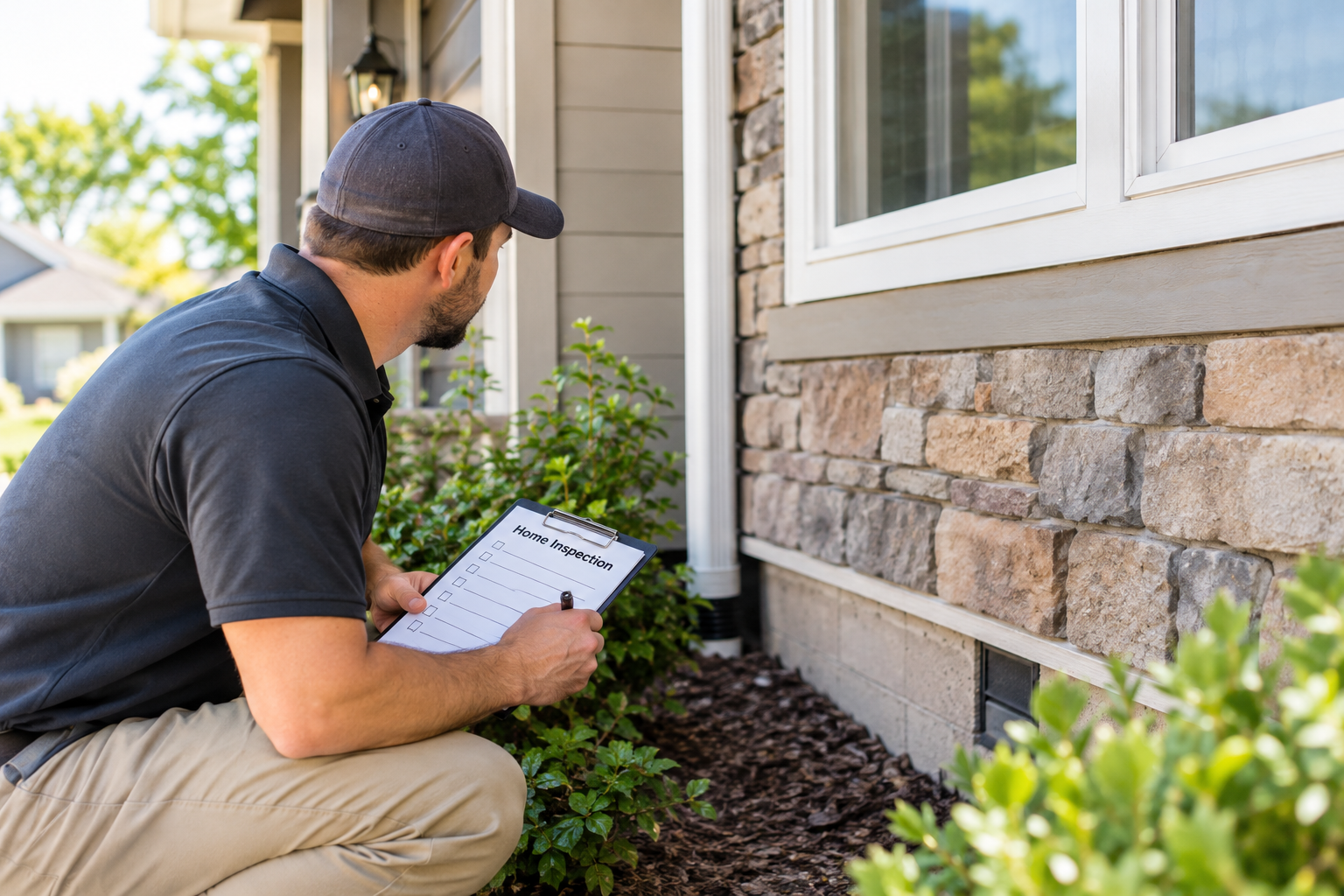
If I could give a buyer only one piece of inspection advice, this is it: go to the inspection and walk it with the inspector. A written report tells you what was found. Standing in the basement or under the roof line with the inspector tells you how serious it is. You can ask, "Is this a safety issue, a big-ticket item, or something I can fix on a Saturday?" and you will understand the report far better when it arrives. Take photos and notes, and bring your questions.
Radon: The Test Too Many Buyers Skip
Radon is an invisible, odorless gas that comes up naturally from the soil and can collect in a home, especially in basements. The EPA says radon is the leading cause of lung cancer among non-smokers, and it places both Kansas City, Missouri and Kansas City, Kansas in Radon Zone 1, its highest-risk category. The EPA and the Kansas Geological Survey both report that roughly one in four homes in Kansas and Missouri has an elevated level, compared with about one in 15 nationally.
The EPA action level is 4 picocuries per liter. A radon test is usually a small add-on to your inspection, and if the result comes back high, a mitigation system can typically be installed. The point is to know before you close, not after. Ask for the test in writing on your inspection request, and talk to me before you decide to skip it.
Foundations and Kansas City Soil
Many Kansas City neighborhoods sit on clay-heavy soil that swells when it is wet and shrinks when it dries out. That movement can show up in a house as hairline cracks, doors that stick, or gaps around windows. Not every crack is a problem; plenty are cosmetic. What your inspector is looking for is a pattern: wide or stair-step cracks, bowing basement walls, or a floor that slopes.
If your inspector flags something structural, do not panic and do not ignore it. Ask for a written evaluation from a licensed structural engineer, and bring that report back to the negotiating table before your inspection period ends.
Sewer Lines, Especially in Older Northland Homes
The main sewer line is the pipe you cannot see until it fails. In older homes with mature trees, roots can work their way into joints, and older clay or cast-iron pipe can crack or collapse. A sewer scope is a camera inspection of that line, and it is one of the best-value add-ons for any home that is a few decades old. If the home is on a septic system or a private well, that needs its own inspection too, and I will help you line up the right specialists.
Roof, Water, and the Items That Cost Real Money
After radon, foundation, and sewer, I tell buyers to focus on the big-ticket items: the roof, the HVAC system, the water heater, the electrical panel, and anything that points to water getting where it should not. Our storms in the Midwest are hard on roofs, so ask the inspector how much life is left and whether the roof should be looked at by a roofing company. Do not let a long list of small items distract you from the three or four that actually move the price.
Why Asking for Everything Rarely Works
Back to those buyers who want the seller to fix everything. Here is what I am seeing on the ground: sellers are more open to repair credits than they were a year ago. That is good news, but it works best when your request is focused. A short, well-documented list of safety issues and major systems gets taken seriously. A 40-item list that includes loose cabinet knobs and a cracked outlet cover can stall the whole conversation and put your deal at risk.
Once the report is in, we sort it into three piles: safety issues, major systems, and cosmetic items. Safety and major-system problems are worth asking the seller to repair or credit. Small items are usually not worth the fight. Often a credit is better than a repair, because it lets you choose your own contractor and do the work to your standard.
An illustration, not a specific client: imagine a buyer under contract on an older Northland home with mature trees. The report lists dozens of items. After walking the inspection and sorting the report, the buyer asks for a sewer line repair quote and a roof evaluation instead of fixing everything. Because the request is short and backed by documentation, the seller is far more likely to say yes to a credit. The buyer ends up with a clearer picture of the real costs and fewer surprises after move-in. Every deal is different, but that approach is the one I recommend.
Looking Beyond the Northland? Independence, MO
If your search is not limited to the Northland, take a look at Independence, Missouri. It has a lot of buyer activity right now and more inventory than we are seeing in the Northland, which can mean more homes to choose from. Many of those homes are older, so the same advice applies: get the radon test, scope the sewer line, and walk the inspection. I am happy to help you compare options on both sides of the river.
It also helps to think about financing early. Some loan programs have property-condition requirements, and the appraisal can surface repair needs of its own. That is one more reason to work with a lender who knows how to handle these situations. I recommend Stephen Smith at Envoy Mortgage (314-239-8558, stephen.smith@envoymortgage.com).
Your Kansas City North Inspection Game Plan
- Book your inspection as soon as you are under contract; inspection windows are short.
- Ask for a radon test with the general inspection.
- Add a sewer scope if the home is older or has mature trees.
- Walk the inspection with your inspector and take notes.
- Get specialist opinions in writing for anything structural, roof, or electrical.
- Sort the report into safety, major systems, and cosmetic before you make requests, and ask for a focused list rather than everything.
Ready to Talk About Your Options?
If you are buying in Platte County, Clay County, Independence, or anywhere in the Northland, I would be glad to walk through what to look for before you ever write an offer. Call or text me at (816) 210-2027 or visit KenHooverSells.com and let’s talk.
This is general information, not legal, financial, or professional inspection advice. Always rely on your licensed home inspector and specialists for conditions at a specific property.
Ken Hoover has a business relationship with Stephen Smith and Envoy Mortgage and may benefit financially from referrals to Envoy Mortgage.
Sources: U.S. EPA Region 7 radon news release (March 2022); Kansas Geological Survey, Radon in Kansas; Redfin first-half 2026 Kansas City housing data (published August 2026).
Ken Hoover | Ken Hoover Real Estate Group
Keller Williams Kansas City North | Powered by Place
Serving the Greater Kansas City Metro Area | Kansas and Missouri
Call or text (816) 210-2027
KenHooverSells@gmail.com
6222 N Chatham Ave, Kansas City, MO 64151
KenHooverSells.com

Keller Williams Kansas City North | 816-452-4200
Each Office Independently Owned & Operated
Equal Housing Opportunity

Ken Hoover
Operator | Ken Hoover Real Estate Group | Keller Williams Realty Kansas City North
or another way